
The Jesus Prayer: Orthodox Contemplation for Everyone
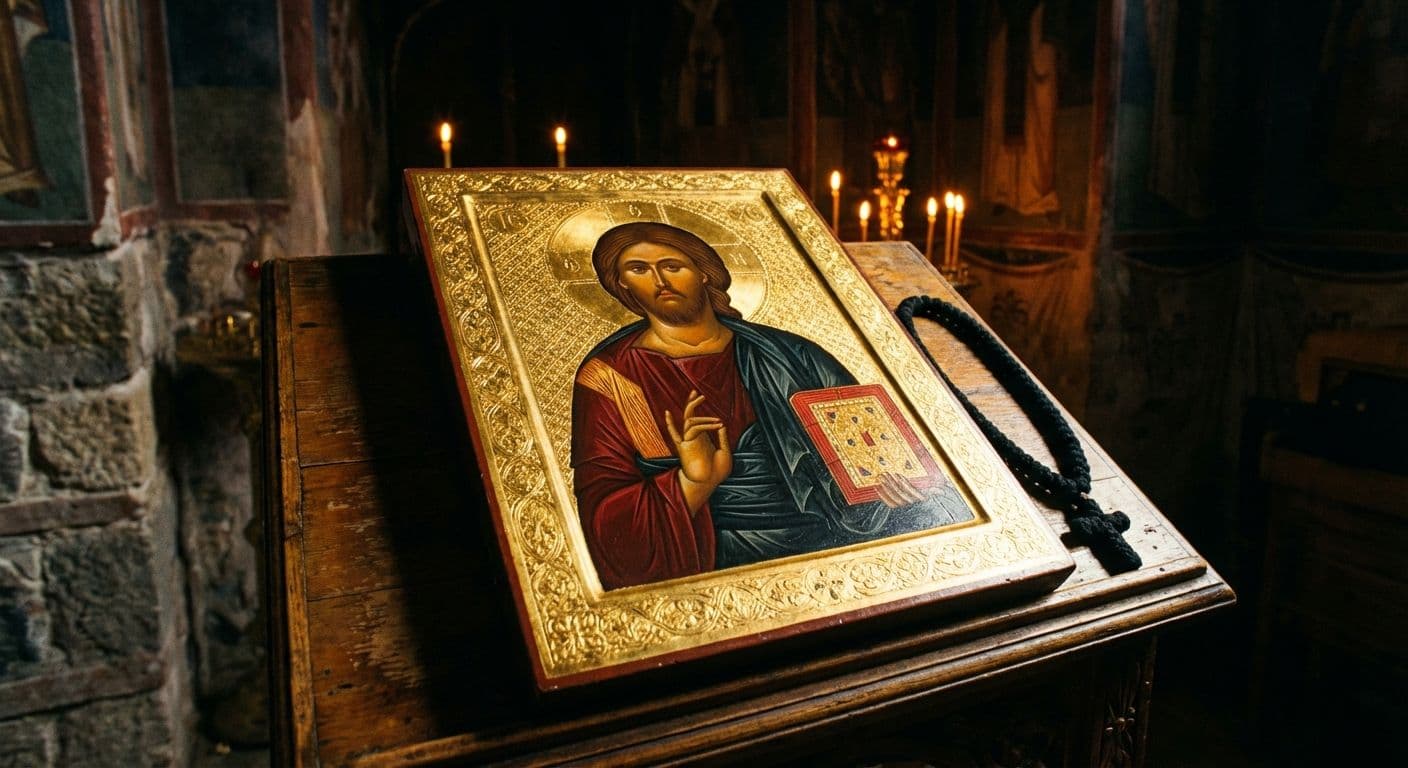
What Is the Jesus Prayer?
The Jesus Prayer is one of the simplest and most beloved prayers in the Christian East:
“Lord Jesus Christ, Son of God, have mercy on me, a sinner.”
In shorter forms, it may be prayed as:
- “Lord Jesus Christ, have mercy on me.”
- “Lord Jesus, have mercy.”
At its heart, the Jesus Prayer is a way of keeping company with Christ through a simple, repeated invocation of his name. It is both a prayer of the heart and a path of contemplation that can be practiced by anyone—Orthodox or not, beginner or experienced, in a monastery or in daily life.
Roots in Scripture and Tradition
The Jesus Prayer gathers together several biblical cries of the heart:
- The blind man by the roadside: “Jesus, Son of David, have mercy on me!” (Luke 18:38)
- The tax collector in the temple: “God, be merciful to me, a sinner!” (Luke 18:13)
- The good thief: “Jesus, remember me when you come into your kingdom.” (Luke 23:42)
Early Christian monks in the Egyptian desert began to repeat short prayers throughout the day to keep their minds fixed on God. Over centuries, this practice developed into the Jesus Prayer tradition, especially in the Eastern Orthodox Church and the spirituality of hesychasm—a way of inner stillness and continual prayer.
Key witnesses to this tradition include:
- The Desert Fathers and Mothers, who practiced continual remembrance of God.
- St. John Climacus (6th–7th c.), who wrote about the power of the name of Jesus.
- St. Gregory Palamas (14th c.), who defended the hesychast tradition of inner prayer.
- The anonymous authors collected in the Philokalia, a classic anthology of Orthodox spiritual writings.
Why the Jesus Prayer Matters Today
The Jesus Prayer offers a way to pray that is:
- Simple – just a few words, easily memorized.
- Portable – can be prayed anywhere: commuting, walking, waiting, resting.
- Grounding – gently gathers a scattered mind and anxious heart.
- Christ-centered – keeps prayer focused on the person of Jesus.
- Honest – acknowledges our need for mercy without self-hatred.
For many, it becomes a kind of breath of the soul—a quiet, steady turning toward God in the midst of ordinary life.
The Full Prayer and Its Meaning
A common full form is:
“Lord Jesus Christ, Son of God, have mercy on me, a sinner.”
Each phrase carries deep meaning:
- “Lord” – We address Jesus as Lord, entrusting ourselves to his care and authority.
- “Jesus” – We call on his personal name, the one who saves.
- “Christ” – We recognize him as the Anointed One, the Messiah.
- “Son of God” – We confess his divinity and relationship with the Father.
- “have mercy” – We ask for God’s compassionate, healing love, not mere pity.
- “on me” – Prayer becomes personal and intimate.
- “a sinner” – We stand in truth about our brokenness, without despair.
Some people find the words “a sinner” difficult. In the Orthodox tradition, this phrase is not meant to crush the heart but to open it in humility, acknowledging that we are always in need of God’s mercy and healing.
If this phrase is hard for you at first, you may begin with a shorter form, such as:
“Lord Jesus Christ, have mercy on me.”
and discuss your experience with a spiritual director or trusted guide.
How to Begin Practicing the Jesus Prayer
You do not need special training to begin. Start simply and gently.
1. Choose a Time and Place
- Find a quiet place where you can sit comfortably.
- Begin with 5–10 minutes once or twice a day.
- You may sit in a chair, on a cushion, or stand—whatever helps you be alert yet relaxed.
2. Settle Your Body and Breath
- Sit upright but not rigid.
- Let your hands rest comfortably (on your lap, or holding a prayer rope if you use one).
- Take a few slow, natural breaths.
- Gently become aware that you are in God’s presence.
3. Pray the Words Slowly
Begin to repeat the prayer, either silently or softly:
“Lord Jesus Christ, Son of God, have mercy on me, a sinner.”
or a shorter form if that is easier.
Let the words:
- Be simple – no need to force emotion or special thoughts.
- Be gentle – don’t strain or rush.
- Be steady – like a quiet rhythm.
4. Coordinate with the Breath (Optional)
Many find it helpful to let the prayer follow the natural rhythm of breathing. For example:
- Inhale: “Lord Jesus Christ, Son of God”
- Exhale: “have mercy on me, a sinner”
Do not force or manipulate your breath. Let it remain natural. The goal is not a technique but a prayerful awareness of God.
5. What to Do with Distractions
Distractions are normal. When you notice your mind wandering:
- Do not scold yourself.
- Gently return to the words of the prayer.
Think of it as returning to Jesus each time you notice you have drifted away.
6. Ending the Time of Prayer
After your set time:
- Let the repetition of the prayer come to rest.
- Sit quietly for a moment in silence.
- You may end with the Lord’s Prayer, a simple “Glory be,” or a brief prayer of thanks.
Using a Prayer Rope (Chotki or Komboskini)
In the Orthodox tradition, many people use a prayer rope—often with 33, 50, or 100 knots—to help them stay focused.
How to use it:
- Hold the rope lightly in one hand.
- With each knot, say the Jesus Prayer once.
- Move to the next knot as you repeat the prayer.
The rope is not a magic object; it is a simple tool that:
- Helps keep track of repetitions without counting.
- Gives your hands something to do, which can calm restlessness.
- Serves as a physical reminder of God’s presence throughout the day.
If you do not have a prayer rope, you can use your fingers, a simple string of beads, or nothing at all.
The Jesus Prayer in Daily Life
Beyond set times of prayer, the Jesus Prayer can gently weave itself into your day.
You might pray it:
- While walking, driving, or riding public transit.
- While doing simple tasks: washing dishes, folding laundry, gardening.
- When you feel anxious, angry, or overwhelmed.
- Before difficult conversations or decisions.
You do not need to repeat it constantly or mechanically. Instead, let it arise naturally, like turning your heart toward Christ again and again.
Over time, many people find that the prayer begins to surface on its own—especially in moments of need or gratitude.
Hesychasm: Inner Stillness and the Heart
The Jesus Prayer is closely linked with hesychasm, a tradition of inner stillness in the Orthodox Church.
Hesychia means silence or quiet. In this context, it refers to:
- A quieting of the mind.
- A gentle guarding of the heart.
- A continual turning toward God in love.
Hesychast writers often speak of the “prayer of the heart”—a state in which the Jesus Prayer is no longer just on the lips or in the mind, but becomes a deep, wordless communion with God.
Important clarifications:
- This is not about chasing mystical experiences.
- It is not a technique to master, but a relationship to grow in.
- It unfolds gradually, often over many years, under the guidance of the Holy Spirit.
For most people, the path is simple: faithful, humble repetition of the prayer, with a desire to love God and neighbor.
The Jesus Prayer and Spiritual Direction
Spiritual direction is a relationship in which you regularly meet with a trained listener to pay attention to God’s presence and movement in your life.
The Jesus Prayer can be a powerful companion to this process.
How It Supports Spiritual Direction
- Deepens awareness – Regular practice helps you notice your inner patterns: fears, desires, resistances, and longings.
- Softens the heart – Asking for mercy opens space for healing and compassion, both for yourself and others.
- Clarifies discernment – A more settled heart can listen more clearly for God’s invitations.
- Anchors you in Christ – Direction is not just about solving problems; it is about growing in relationship with Jesus.
What to Share with a Spiritual Director
If you are practicing the Jesus Prayer, you might talk with your director about:
- How often and in what ways you are praying it.
- What you notice in your body, emotions, and thoughts during and after prayer.
- Any resistance, dryness, or boredom you experience.
- Any sense of consolation, peace, or gentle joy.
- How the prayer affects your relationships and daily choices.
A good director will not try to control your practice but will help you:
- Stay grounded and balanced.
- Avoid extremes of pressure, perfectionism, or self-judgment.
- Recognize God’s quiet work in and through the prayer.
Common Questions and Concerns
1. Is the Jesus Prayer only for Orthodox Christians?
No. While it is deeply rooted in the Eastern Orthodox tradition, many Christians from other traditions—Catholic, Anglican, Protestant, and others—have found it to be a rich and Christ-centered form of prayer.
If you are not Orthodox, it is wise to:
- Approach the practice with respect and humility.
- Learn from Orthodox sources when possible.
- Consider speaking with a spiritual director familiar with contemplative prayer.
2. Is Repetition Wrong?
Some worry that repeating a short prayer might be what Jesus warned against as “vain repetitions” (Matthew 6:7).
In the Jesus Prayer tradition, repetition is not about piling up words to get God’s attention. Instead, it is about:
- Simplicity – letting go of many words to rest in God.
- Focus – gently gathering a scattered mind.
- Love – returning again and again to the name of Jesus.
The problem is not repetition itself, but empty, anxious, or manipulative speech. The Jesus Prayer is meant to be the opposite: a humble, trusting turning toward God.
3. What If I Feel Nothing?
It is normal to feel:
- Dryness or boredom.
- Restlessness or distraction.
- Little or no emotion.
The value of the Jesus Prayer does not depend on what you feel. It is an act of faith and love, not a technique for producing experiences.
If you feel nothing:
- Continue gently, without forcing.
- Bring this experience to spiritual direction.
- Trust that God is at work in hidden ways.
4. Can the Jesus Prayer Replace Other Prayers?
The Jesus Prayer is usually not meant to replace:
- Participation in the Eucharist or Divine Liturgy.
- Reading and praying with Scripture.
- The broader life of the Church.
Instead, it is a complement—a way of carrying the presence of Christ into every moment. For many, it becomes a thread that ties together liturgy, Scripture, and daily life.
A Gentle Way to Start: A Simple Practice Plan
If you would like a concrete way to begin, you might try this for four weeks:
Week 1: Learn the Prayer
- Choose a form of the prayer (full or short) and memorize it.
- Pray it for 5 minutes once a day, sitting quietly.
- When distractions come, gently return to the words.
Week 2: Add the Breath
- Continue your 5 minutes of daily prayer.
- Begin to let the words follow your natural breath.
- Once or twice during the day, pray the Jesus Prayer for a minute while walking or doing a simple task.
Week 3: Extend the Time
- Increase to 10 minutes once a day, or 5 minutes twice a day.
- Notice how the prayer affects your mood, reactions, and relationships.
- If possible, talk with a spiritual director about your experience.
Week 4: Weave It into Daily Life
- Keep your regular prayer time.
- Add brief moments of the Jesus Prayer:
- When you wake up.
- Before meals.
- Before important conversations.
- As you go to sleep.
Adjust this plan as needed. The goal is not to meet a quota but to grow in loving awareness of Christ.
Praying with the Name of Jesus
The heart of the Jesus Prayer is not technique but relationship. To repeat the name of Jesus is to:
- Call on the One who knows you and loves you.
- Entrust your weakness and sin to his mercy.
- Allow his presence to shape your thoughts, desires, and actions.
Whether you are just beginning or have prayed for many years, you can always return to this simple cry:
“Lord Jesus Christ, Son of God, have mercy on me.”
If you sense a desire to explore this more deeply, consider seeking a spiritual director who is familiar with contemplative prayer or Orthodox spirituality. Together, you can listen for how Christ is meeting you in this ancient, ever-new way of prayer.